
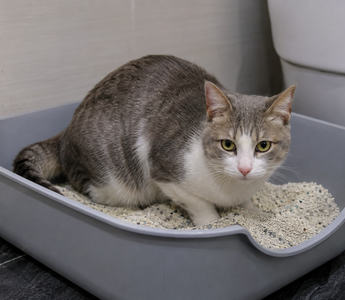
If your cat is visiting the litter box more often or producing noticeably larger urine clumps, the change deserves attention. Urination changes can appear before other signs of illness.
The first step is to distinguish frequent urination from increased urine volume. A cat that squats repeatedly and produces only a few drops may have a lower urinary tract problem or obstruction. A cat producing unusually large amounts of urine is more likely to have a condition such as kidney disease, diabetes, or hyperthyroidism. The first pattern can be an emergency; the second usually requires prompt veterinary testing.
Here is how to tell the difference, what can cause each pattern, and what to track before contacting your veterinarian.
What Does "Peeing a Lot" Mean in Cats?
Urination frequency and urine volume are separate measures. “Peeing a lot” can describe either one, but they point to different problems. Start by identifying which pattern your cat has.
Your Cat is Peeing More Often
Your cat visits the litter box more often than usual, sometimes several times within a short period. Each attempt produces little urine, and your cat returns soon afterward. The small amount produced with each visit is the key sign.
Your Cat is Producing More Urine
The number of litter box visits may stay similar, but the urine clumps become larger and heavier. You may also need to scoop more often or refill the water bowl more frequently. This pattern indicates increased daily urine volume rather than urinary urgency.
Frequency vs. Volume
|
What you notice |
What it may mean |
|
Many trips + tiny amounts |
Frequent or strained urination |
|
Fewer trips + large amounts |
Increased urine production |
|
More trips + large amounts |
Increased frequency and volume |
If the reason is unclear, weigh the urine clumps for two or three days and compare the totals. A simple measurement is more reliable than estimating from memory.
How Often and How Much Do Cats Normally Pee?
Many healthy adult cats urinate about 2 to 4 times a day. Diet, water intake, and climate can affect the frequency. Typical daily urine output is about 20-30 ml per kilogram of body weight. Consistent output above roughly 50 ml/kg/day is generally considered excessive.
Why Is My Cat Peeing a Lot?
Several conditions can produce similar litter box changes. Diabetes, chronic kidney disease, and hyperthyroidism may all increase urine volume, while lower urinary tract disorders often cause frequent attempts with small amounts. Blood tests and urinalysis are usually needed to identify the cause.
Your Cat Is Drinking More Water
Higher water intake can increase urine output. Hot weather, increased activity, a switch from wet food to dry food, or salty treats may lead a cat to drink more. Cats eating mostly dry food also get less moisture from meals and tend to drink more from the bowl. These changes are usually modest and linked to an obvious trigger. A steady rise in thirst over several weeks needs veterinary evaluation.

Diabetes
In diabetes, excess glucose enters the urine and draws water with it, increasing both urination and thirst. Other common signs include weight loss despite a normal appetite and a poorly groomed coat. Older and overweight cats are at higher risk.
Chronic Kidney Disease
Healthy kidneys conserve water by concentrating urine. Chronic kidney disease reduces that ability, leading to larger volumes of dilute urine and increased thirst. It is common in cats over ten years old. Early disease may cause only increased drinking and urination while weight loss and coat changes may appear later. Blood tests and urine concentration measurements help confirm the diagnosis.
Hyperthyroidism
Hyperthyroidism is most common in middle-aged and older cats. Typical signs include increased thirst and urination, weight loss despite a strong appetite, restlessness, increased vocalization, and a poor coat. A blood test measuring thyroid hormone is the usual first step. As hyperthyroidism and kidney disease can occur together, vets often evaluate both.
Urinary Tract Problems
Lower urinary tract problems often cause frequent litter box visits with only small amounts of urine. This pattern is easy to mistake for increased urine production, but its total urine volume is less.
Possible conditions include:
- Bladder inflammation
- Urinary tract infection
- Urinary stones
- Crystals
- Other lower urinary tract disorders
These conditions irritate the bladder or urethra and create persistent urinary urgency. In cats under about ten, sterile bladder inflammation is more common than a bacterial urinary tract infection. If your cat repeatedly strains and produces little or no urine, treat it as an emergency.
Stress and Environmental Changes
Stress can trigger bladder inflammation in some cats. Common triggers include moving, a new pet, houseguests, or changes in routine. Litter box conditions also matter. A dirty, undersized, or poorly located box may discourage normal urination. Provide one litter box per cat plus one extra, placed in quiet, separate locations.
When Is Frequent Urination an Emergency?
Some causes of increased urination need a routine veterinary appointment. Signs of possible obstruction or severe urinary disease need immediate care.
Seek urgent veterinary care if your cat:
- Repeatedly strains to urinate
- Produces little or no urine
- Cries or vocalizes while trying to urinate
- Has blood in the urine
- Becomes restless or distressed
- Vomits
- Becomes weak or lethargic
- Suddenly stops producing urine
Male cats have a higher risk of life-threatening urinary obstruction. Their urethra is narrower and can become completely blocked by crystals, mucus, or inflammatory debris. A complete obstruction can cause rapid deterioration, so repeated straining with little or no urine requires emergency veterinary care.
What Can You Track at Home?
A record of your cat’s litter box habits gives your vet more useful information than memory alone. Track the following for several days if your cat is stable and not showing emergency signs.
1. Frequency
Count how many times your cat visits the litter box each day and compare it with the usual pattern.

2. Urine Volume
Note whether urine clumps are smaller, larger, or unchanged. A kitchen scale can provide a more objective comparison. In multi-cat homes, temporary separate litter boxes may help identify which cat produce each clump.
3. Water Intake
Mark the water level in the bowl and record how often you refill it. Also note other water sources, such as faucets or showers, that can make intake harder to estimate.
4. Other Symptoms
Record changes in weight, appetite, energy, or vomiting. Also note straining, hesitation before urinating, vocalization, urination outside the box, or increased genital grooming.
5. Changes Over Time
A persistent change from your cat’s usual pattern is more meaningful than a single unusual litter box visit.
Automatic litter box monitoring can make long-term changes easier to identify. The IdealZero B1 records litter box visits, data of urine and stool automatically, creating a dated history of urination frequency. This can support veterinary discussions when necessary.

FAQs About Cats Peeing a Lot
Why is my cat peeing a lot but not drinking more?
Frequent urination without increased thirst may point to a lower urinary tract problem rather than increased urine production. Bladder inflammation, infection, stones, or crystals can create repeated urgency while producing only small amounts of urine. Arrange a veterinary visit, and seek urgent care if your cat is straining or producing little or no urine.
Do cats pee more as they get older?
Some older cats urinate more indeed, but age is not the cause. Chronic kidney disease, diabetes, and hyperthyroidism become more common with age and can increase urine output. New changes in litter box of a senior cat should be evaluated rather than treated as normal aging.
Why is my male cat peeing frequently?
Frequent attempts to urinate in a male cat require close attention because males are more prone to urethral obstruction. Repeated squatting that produces little or no urine, especially with crying, restlessness, vomiting, or weakness, is an emergency.
Why is my cat peeing a lot but acting normal?
It can be simply because your cat drinks more water due to hot weather, or it can indicate illness. Some illnesses increase urination before they affect appetite, energy, or behavior. Early kidney disease and diabetes can present this way. If increased urination persists for more than a few days, schedule a veterinary appointment even if your cat seems normal.


