
Most healthy adult cats urinate about two to four times a day. However, frequency can vary with diet, water intake, age, and temperature. More important than any average is your cat's usual pattern. Knowing that baseline makes it easier to recognize a meaningful change and decide when to contact your vet.
How Often Should Cats Pee? Quick Answer
For most healthy adult cats, urinating 2 to four 4 a day is a useful reference range, not a strict rule. Some healthy cats go more or less depending on their diet and fluid intake. The key is whether your cat's pattern has changed from its usual baseline.
|
Question |
General answer |
|
How often do cats usually pee? |
About 2-4 times a day |
|
Is that an exact rule? |
No. It is a general reference range. |
|
What matters most? |
Your cat's usual baseline |
|
When should you worry? |
Sudden changes, discomfort, straining, or little/no urine |
How Often Should Cats Pee by Age?
Kittens
Newborn kittens cannot urinate on their own. Their mother stimulates urination, and hand-raised kittens need similar help from a caregiver until they are about three weeks old. Once kittens begin using the litter box independently, they usually urinate smaller amounts more often than adult cats because their bladders are smaller and their fluid intake is high relative to body size. Frequent and small urinations are generally normal at this stage. However, a kitten that has not urinated all day should be evaluated by a vet the same day.

Adult Cats
Adult cats often develop a consistent litter box routine. Two to four urinations per day is a useful reference range, but healthy cats may fall slightly outside it. Your cat's individual pattern is more informative than the average. For example, a change from two urine clumps a day to five is more meaningful than whether either number falls within a published range.
Senior Cats
Senior cats may urinate more often, but the change is usually related to underlying health conditions rather than age itself. Chronic kidney disease is common in older cats and can reduce the kidneys' ability to concentrate urine, leading to larger volumes of more dilute urine and increased thirst. Diabetes and hyperthyroidism can cause similar changes and also become more common with age. Increased urination should not be dismissed as a normal part of aging. Blood tests and urinalysis can help a vet identify the cause. Arthritis can also affect litter box habits if a cat has difficulty entering a high-sided box. For cats over ten, twice-yearly veterinary checkups can help detect these changes earlier.
What Affects How Often a Cat Pees?
Water Intake
In general, greater water intake leads to greater urine output. A cat's water intake can vary with access to water and individual preference. Some cats drink more from a fountain than from a still water bowl. A bowl that is placed near a noisy appliance, or made harder to access may reduce water intake. Providing two or three fresh water stations in quiet areas away from food and litter boxes can make water easier to access.
Wet Food vs. Dry Food
Canned food is typically about 70-80% water, while dry food contains closer to 10%. Cats that eat mostly wet food get more water with each meal and tend to produce a larger volume of more dilute urine. Cats on dry food generally need to drink more water separately, and some may not fully compensate for the lower moisture content of their food. If you recently changed your cat's diet, you may notice a change in litter box habits.

Age and Activity
Young, active cats may drink more than less active senior cats, while kittens and adolescents tend to drink water more frequently. These differences do not usually cause a major change in urination frequency on their own, but they can explain why two cats in the same home have different litter box habits. Any new increase in urination in a senior cat deserves attention. It can be a sign of kidney disease or another medical condition.
Weather and Temperature
Hot weather can increase a cat's water needs, especially if the cat becomes overheated. Some cats drink noticeably more in warm weather, while others show little change. Dry indoor air during winter may also increase water intake.

Medications and Health Conditions
Some medications and medical conditions can change how much a cat drinks and urinates. If your cat has recently started a new medication, ask the prescribing vet whether increased thirst or urination is an expected side effect.
What Does Normal Cat Urination Look Like?
A healthy pattern is generally consistent for the individual cat: urination occurs comfortably, urine output is relatively stable, and behavior before and after using the litter box remains normal. Defining your cat's usual pattern makes it easier to recognize changes that may need veterinary attention.
Signs of a Normal Urination Pattern
- Your cat uses the litter box regularly at roughly consistent intervals.
- Urine output remains fairly consistent from day to day.
- Your cat urinates without obvious discomfort.
- There is no repeated straining or prolonged squatting with little or no urine.
- Urination frequency has not changed suddenly.
- Your cat behaves normally, without unusual hiding or restlessness.
- Appetite and water intake remain relatively stable.
When Should You Be Concerned About How Often Your Cat Pees?
Your Cat Suddenly Starts Peeing More Often
A sudden increase in urination frequency should be investigated, especially when it is accompanied by increased thirst, larger urine clumps, weight loss, or changes in behavior. Increased drinking together with increased urination can provide an important clue for your vet.
Diabetes, chronic kidney disease, and hyperthyroidism, common in middle-aged and older cats can all increase thirst and urine production. Lower urinary tract problems can also cause more frequent litter box visits, but these visits often produce only small amounts of urine and may involve visible straining or discomfort.
These causes cannot be distinguished at home. Blood tests and urinalysis are commonly used to identify the cause, and treatment depends on the diagnosis. Before the appointment, note when the change began, how much your cat is drinking, and whether urine clumps are larger or litter box visits are more frequent. This information can help your vet evaluate the problem more efficiently.
Your Cat Suddenly Pees Less Often
A decrease in urination can be more urgent than an increase. Repeated attempts to urinate with little or no urine can be an emergency, especially in male cats. Their narrow urethras can become completely blocked, and the resulting obstruction can quickly cause life-threatening complications affecting the kidneys and heart.Do not wait for the problem to resolve on its own, seek emergency veterinary care immediately.
Urinary obstruction can sometimes be mistaken for constipation because the posture may look similar. If you are unsure which problem you are seeing, treat it as urgent.
Other Warning Signs to Watch For
Contact your veterinarian if you notice any of the following signs and several occurring together may require more urgent evaluation:
- Straining or spending an unusually long time in the litter box
- Crying or vocalizing while urinating
- Blood in the urine or a pink tint in the litter
- Excessive licking of the genital area
- Urinating outside the litter box, especially in a cat that normally uses it reliably
- Restlessness or pacing
- Hiding or suddenly avoiding contact
- Vomiting or lethargy
Urinating outside the litter box is sometimes assumed to be a behavioral problem, but it can also be a sign of pain or urinary disease. A cat that associates the litter box with discomfort begins urinating elsewhere, including in a sink or bathtub.
How to Monitor How Often Your Cat Urinates?
A simple way to establish a baseline is to count urine clumps each time you scoop the litter box and record the number for one or two weeks. Note their approximate size as well, since the number of clumps tells you how often your cat urinates, while their size gives you a rough idea of urine volume.
Manual tracking has limitations. It is less reliable when you are away from home, or in a multi-cat household.
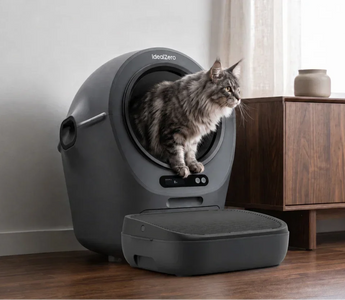
An automatic litter box with built-in tracking can make it easier. The IdealZero B1 automatica litter box- records litter box visits and uses weight-based measurements to estimate urine output, allowing urination frequency and approximate volume to be tracked automatically. In multi-cat homes, it can distinguish cats by weight. Over time, these records can make gradual changes of litter box habit easier to identify. The recorded data provides valuable information for your vet.

FAQs About Cat Urination
Is it normal for a cat to pee twice a day?
Yes, it can be. Some healthy cats, including those that eat mostly dry food and drink relatively little, may urinate twice a day. The number alone is not necessarily a concern if it is normal for your cat. However, a drop from a long-standing pattern of four times a day to twice a day is a meaningful change. If the decrease is accompanied by straining or smaller urine clumps, contact your vet.
Why does my cat pee more often than usual?
First, consider any recent changes in diet, water access, weather, or medication. These factors can increase urination. If there is no clear explanation, the pattern can provide useful context: larger urine volumes with increased thirst may be associated with conditions such as diabetes, kidney disease, or hyperthyroidism, while frequent small amounts with straining or discomfort may indicate a lower urinary tract problem. A vet may need urine and blood tests to determine the cause.
How long can a cat go without peeing?
Most healthy cats urinate at least once within a 24-hour period. If a full day passes with no urine in the litter box and you are confident you have not missed it, contact your vet that day. If your cat is actively trying to urinate but producing nothing, seek veterinary care immediately.
How Often Should Cats Pee at Night?
There is no fixed number of times a cat should urinate overnight. Some cats use the litter box once between bedtime and morning, while others do not use it at all. The important point is whether the pattern changes.


