
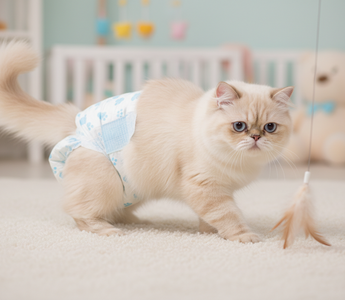
Cats are naturally clean animals. Most cats would rather wait than use a dirty or unfamiliar place to go. So if your cat needs a diaper, there is usually a specific reason behind it.
Common situations include:
- Senior cats who have more trouble controlling their bladder.
- Cats recovering from surgery or injuries, especially those affecting movement or the lower body.
- Cats with health conditions that make it harder to control urination.
- Cats traveling long distances, such as during a road trip or flight.
- Cats experiencing major stress, such as moving to a new home, welcoming a new baby, or introducing another pet.
This guide covers the types of cat diapers on the market, their pros and cons, how to choose the right one, and how to use them without hurting your cat's skin or dignity. However, in most cases, a diaper is a temporary solution designed to help your cat stay comfortable while you address the reason behind the change, especially for a healthy cat.
Types of Cat Diapers: Pros and Cons
Browse any pet supply site and you'll find three main categories of diapers for cats. Each type has its own pros and cons and best for cases. Check the table below:
| Types | Best For | Pros | Cons |
| Disposable cat diapers | Short-term recovery, travel, trial runs | No laundry. Hygienic single use. Easy to toss after a mess. Widely available in small-dog sizes that fit cats. |
Ongoing cost adds up fast. Creates trash. Sizing runs large because most are made for dogs. Adhesive tabs can snag fur. |
| Washable (reusable) cloth diapers | Longer recovery periods, incontinence managed under a vet's care | Cheaper over weeks of use; softer fabric; eco-friendly; often better fit options for cats. | Must be washed after every soiling; you need 3–5 in rotation; absorbency varies; stains and odors linger if not cleaned fast. |
| Diaper suspenders / bodysuit-style holders | Escape-artist cats who wiggle out of everything | Keeps the diaper in place; harder for the cat to remove; distributes pressure so straps do not dig in. | Extra cost on top of diapers; more fabric means more heat; takes longer to put on and remove; some cats freeze up in full-body garments. |
One thing to know about cat diapers: most products are not made exclusively for cats. Many “cat diapers” are actually extra-small dog diapers with a tail opening. While they can work well for cats, this is also why sizing can vary so much between brands. A diaper that fits a small Chihuahua perfectly may feel loose on a slim cat.
Some cat owners also try using human baby diapers by cutting a small hole for the tail. This can work as a temporary solution, but baby diapers are designed for a different body shape. The leg openings may not fit a cat’s body properly, which can lead to leaks around the legs.
If your cat needs diapers for more than a short period, choosing a diaper made specifically for pets is usually worth the extra cost. A better fit means better comfort and fewer messes.

How to Choose the Right Cat Diapers?
Choosing a diaper is mostly about fit, absorbency, and how your specific cat behaves. Here is what actually matters when you are comparing cat diapers.
Measure your cat, do not guess
Grab a soft measuring tape and measure your cat's waist just in front of the hind legs, where the diaper will sit. Then weigh your cat. Most sizing charts use both numbers. An average adult cat falls between 8 and 12 pounds with a waist of roughly 10 to 14 inches, which usually lands in an XS or S dog-diaper size.
If your cat is between sizes, size down. A snug diaper leaks less than a loose one, and cats slip out of loose diapers with almost insulting ease.

Check the tail hole placement
The tail hole may seem like a small detail, but it can make a big difference. If it is positioned too low or too far back, the diaper may not sit properly, which can lead to leaks and discomfort.
When choosing a cat diaper, look for products that show how they fit on a cat or small dog from behind. Customer reviews can also be helpful, especially reviews from cat owners who mention the fit and performance.
Consider Absorbency and How Long Your Cat Will Wear It
The right absorbency depends on your cat’s situation. A lightweight diaper may work well if you are changing it every few hours. However, cats recovering from surgery or cats who need longer wear periods may need a more absorbent design with a waterproof outer layer.
Keep in mind that a more absorbent diaper does not mean it can be left on longer. Regular changes are still important for your cat’s comfort and skin health.
Choose the Right Closure Style
The way a diaper closes can matter just as much as the material. Different closure types work better for different cats.
- Hook-and-loop closures (like Velcro) are easy to adjust, but they can catch on long fur.
- Adhesive tabs on disposable diapers hold securely, but they only work once. If the tabs are placed incorrectly, you may not be able to reuse the diaper.
- Snap closures on washable diapers are durable and gentle on fur, but they usually offer less flexibility for adjusting the fit.
If your cat has long hair, consider snap closures or hook-and-loop designs with covered panels to help prevent tangles.
Consider Your Cat’s Personality
Every cat reacts differently to wearing a diaper. A calm senior cat may adjust quickly, while a playful or energetic cat may spend the first few minutes trying to figure out how to remove it.
For cats who are especially determined, a diaper holder, suspender system, or recovery suit can provide extra support during the adjustment period.
In Multi-Cat Homes, Keep Supplies Separate
If multiple cats need diapers, avoid sharing the same supplies between cats with different body sizes. Keep each cat’s diapers labeled and separated so you always have the right fit.
It is also worth watching how your cats interact. Some cats may try to paw at or play with another cat’s diaper, which can loosen the fit. A quick check after rough play can help prevent unexpected messes later.

Pros and Cons of Using Cat Diapers
Cat diapers can be helpful in certain situations, but they are not a solution for every problem. Understanding their benefits and limitations can help you decide if they are right for your cat.
Benefits of Using Cat Diapers
1. Protect your home while you find the cause
Accidents can be stressful for both you and your cat. A diaper helps protect carpets, furniture, and bedding while you work on addressing the reason behind the problem.
2. Support cats during recovery
After surgery, injuries, or certain health issues, some cats may temporarily have trouble controlling their bladder. A diaper can help keep them comfortable at home while they recover.
3. Make travel easier
Long car rides or flights can be stressful for cats. For some cats, a diaper can provide extra protection during travel, even if it is only needed for a single trip.

4. Reduce stress and protect your bond
Cleaning up accidents every day can become frustrating. A diaper can give you more patience and breathing room while you and your veterinarian figure out what is causing the issue.
Cons of Using Cat Diapers
Cat diapers can be helpful in certain situations, but they also come with some challenges. Understanding these drawbacks can help you decide whether they are the right choice for your cat.
1. Some cats may not like wearing them
Cats are naturally clean animals and spend a lot of time grooming themselves. A diaper can feel unfamiliar and may prevent them from reaching areas they normally keep clean. Many cats adjust after a few days, but some may never become completely comfortable wearing one.
2. Skin care becomes especially important
Moisture sitting against your cat’s skin can cause irritation and discomfort. To help prevent skin problems, diapers should be changed regularly and your cat’s skin should be checked often.
3. A diaper may cover up the real reason behind the problem
A sudden change in litter box habits can sometimes be a sign of an underlying issue, such as stress, discomfort, or a health concern. While a diaper can help manage accidents, it does not address the reason your cat is avoiding the litter box.
If your cat suddenly stops using the litter box, it is always best to check with your veterinarian first. Think of a diaper as a temporary aid, not a long-term solution.
4. They require ongoing maintenance
Using a cat diaper means adding extra care to your routine: frequent changes, skin checks, cleaning, and making sure the diaper still fits properly. This may be manageable during a short recovery period, but it can become challenging as a long-term arrangement.
Which Cat Diaper Brands Are Worth Buying?
Cat diaper products change frequently, so a brand that works well today may not always be the best choice in the future. Sizing, materials, and product quality can all change over time.
For updated recommendations, you can also check trusted pet resources, such as cats.com'guide to the best cat diapers that regularly review and compare cat diaper options. When evaluating any recommended product, pay attention to the same factors that matter most: fit, absorbency, comfort, and your cat’s individual needs.
Our Recommendation: Solve the Cause, Not Just the Symptom
A cat diaper can be helpful, but it is best viewed as a temporary tool, not a long-term solution. It can make life easier during surgery recovery, travel, or while your veterinarian is figuring out what is causing the problem.
For a healthy cat, however, the better approach is to understand why the litter box behavior changed in the first place.
If your cat has used the litter box consistently for years and suddenly stops, and your veterinarian has ruled out medical issues, the cause is often related to stress or the home environment.
Common triggers include:
- Moving to a new home, renovations, or changes in furniture placement
- A new cat, dog, baby, or other major change in the household
- A litter box that is not cleaned often enough
- A box placed in a noisy or busy area
- Another cat blocking access to the litter box (especially in multi-cat homes)
- A new type of litter or an unfamiliar litter box design
The first step is paying attention to patterns. Notice when and where accidents happen.
- Peeing right next to the litter box may mean your cat dislikes the box itself.
- Choosing soft surfaces like laundry or bedding may be a sign of stress.
- Straining, crying, or showing discomfort while urinating should always be checked by a veterinarian.
Once you understand the possible cause, improve your cat’s litter box environment:
- Place the box in a quiet area where your cat can easily enter and leave.
- Make sure there is enough space for your cat to turn around comfortably.
- In multi-cat households, follow the common recommendation of having one litter box per cat, plus one extra, placed in different areas of the home.

A cleaner, calmer litter box environment can make a bigger difference than simply managing accidents after they happen.
Keeping the litter box clean is one of the biggest challenges for any cat owner. Even if it doesn't smell unpleasant to you, your cat's highly sensitive sense of smell may tell a different story. A litter box that isn't cleaned promptly can quickly become a reason for avoidance.
That's why the IdealZero B1 Self-Cleaning Litter Box refreshes itself after every use. Its rotating cleaning system automatically separates waste into a sealed collection bin, so your cat always returns to a clean litter bed without the need for constant scooping.
Cleanliness goes beyond waste removal. An active ventilation system continuously helps reduce odors before they spread, keeping your home fresher between cleanings.
And because comfort matters too, the B1 operates at just 35 dB, about the sound level of a quiet library or a soft whisper, so cleaning cycles won't disturb you, your family, or your cat, even during the night.

Of course, a self-cleaning litter box is not a replacement for veterinary care and cannot solve medical conditions that affect litter box habits. However, for many common litter box issues caused by poor cleanliness or stress, keeping the box consistently clean can help address the root cause rather than just the symptoms.
FAQs About Cat Diapers
1. How often should you change a cat diaper?
Check the diaper every 3 to 4 hours and change it as soon as it is wet or soiled. Never leave a soiled diaper on longer than that because trapped moisture leads to skin irritation and urine scald. At each change, wipe the area with an unscented pet-safe wipe, let the skin air-dry for a minute, and look for redness before putting on a fresh diaper. If stool is involved, change immediately — feces against skin causes problems much faster than urine.
2. Can a cat wear a diaper overnight?
Using a diaper overnight is not ideal, but in some situations it may be necessary. If your cat needs to wear one while sleeping, make it the longest stretch between changes.
Before bedtime, put on a fresh, highly absorbent diaper. Change it as soon as your cat wakes up in the morning, and gently clean and dry the area to keep your cat comfortable.
Pay close attention to your cat’s skin. If you notice redness, irritation, sores, or a strong ammonia smell when changing the diaper, it may be a sign that your cat is wearing it for too long.
3. Do cats hate wearing diapers?
Many cats feel uncomfortable wearing a diaper at first. You may notice behaviors like walking backward, lying down dramatically, or trying to remove the diaper. These reactions are usually temporary as your cat gets used to the new feeling.
The best way to help your cat adjust is to introduce the diaper slowly:
- Let your cat sniff and investigate the diaper before putting it on.
- Start with short sessions of just a few minutes.
- Offer treats and praise to create a positive association.
- Gradually increase the wearing time over several days.
A proper fit can make a huge difference. Many cats that seem to dislike diapers are actually reacting to discomfort from a diaper that is too tight, too loose, or rubbing against their tail or skin.
Conclusion
Cat diapers can be helpful in certain situations, such as after surgery, for senior cats with incontinence, or during travel. If you decide to use one, choose the right size, change it regularly, and check your cat’s skin to keep them comfortable. Moreover, a cat diaper is meant to be a temporary helper, not a long-term fix. Find the cause behind the problem, and you can help your cat get back to feeling comfortable again.


