
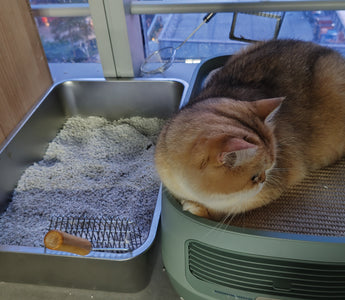
Your cat has a litter box, walks right past it, and leaves a puddle on the bath mat, in the tub, or on the floor just a few inches from the box.
There are three broad reasons this happens:
- Your cat dislikes something about the litter box
- Your cat has learned to prefer another location
- Urinating is painful or medically difficult
Warm note: Any sudden change in litter box habits need a veterinary visit before you start changing the setup. If your cat associates the box with pain, they may avoid the box even it is clean.
7 Litter Box Problems of Cat Urinating Outside the Litter Box
1. The Litter Box is too Dirty
Cats have a much stronger sense of smell than we do, so a box that seems fine for us might smell too strong to cats. Urine also becomes more pungent as it breaks down, and old clumps make the surface less comfortable to walk on. Since cats dig before and after they urinate, many will look for a cleaner, drier place to go. That may be the rug a few feet away.
2. Your Cat Dislikes the Litter
Research on litter preferences consistently points to fine-grained, unscented clumping litter as a popular choice. Strong fragrances are designed for people, but they can be overwhelming to cats making them avoid the box. Dust is another factor to watch, especially for cats with a history of respiratory problems.

3. The Litter Box is too Small
The box should be at least one and a half times your cat's body length from nose to the base of the tail, with enough room to turn around, dig, and squat without pressing against the sides. Many standard litter boxes are too small for a Maine Coon, large Ragdoll, or overweight cat.
4. Your Cat doesn't Like a Covered Litter Box
A litter box with a lid traps the scent inside, which may be appealing to humans, but it may reduce a cat's willingness to use it. If your cat hesitates at the entrance or backs out without using the box, remove the lid for a week and see whether their behavior changes.
5. The Litter Box is in the Wrong Location
Cats generally feel comfortable when they can see their surroundings and have an easy way out. Some locations can make a litter box feel noisy, exposed, or difficult to access.

|
Wrong location |
Reasons |
|
Next to a washing machine |
loud and unpredictable |
|
In a busy hallway |
No privacy, being disturbed |
|
In the basement |
Difficult to reach for senior cats and cats with mobility problems. |
|
Next to food or water bowls |
Cats prefer to keep their eating and elimination areas separate. |
6. No Enough Litter Boxes
A common cat math is one litter box per cat, plus one extra, so two cats need three boxes. Place them in separate locations rather than lining them up in one corner, as several boxes in the same area still give cats access to only one location. In multi-cat homes, the issue is often access rather than the number of boxes. One cat can block another simply by controlling the path to the box, even without fighting.
7. Your Cat has a Negative Association with Litter Box
Cats can form strong associations between a place and an unpleasant experience. A cat who experienced bladder pain while using the box may continue avoiding it even after the medical problem has cleared. The same pattern can develop if a cat is cornered by another cat, startled by a loud appliance, or frightened by a covered box.
Medical Problems Causes Litter Box Avoidance
Sometimes the litter box is not the real problem. If a cat reliably using the box for years suddenly avoids it, a medical cause deserves prompt attention. Rearranging the litter box will not solve the problem until the underlying issue is addressed.
Painful Urination
Bladder inflammation, urinary tract infections, and feline idiopathic cystitis can all make urination painful. Cats then associate that pain with the litter box. Instead of using box, cats choose soft and smooth surfaces such as tile, a bathtub, or a sink. Blood-tinged urine, frequent small amounts of urine, or excessive grooming around the genital area signal a urinary problem.
Urinary Urgency
Some medical conditions cause cats to urinate more often or produce more urine. Diabetes and chronic kidney disease can increase urine volume, while bladder inflammation can create a frequent urge to urinate even when little urine is produced. A cat may not make it to the box in time causing urinating close to the box. If an older cat suddenly starts drinking much more water, veterinary evaluation is more appropriate than simply changing the litter.
Arthritis and Mobility Problems
Arthritis is common in senior cats and makes a litter box difficult to reach or enter. High-sided boxes, top-entry designs, and stairs can all become obstacles. Watch for hesitation before jumping or a cat who stops partway up the stairs. A box with a low entrance, around three to four inches, and at least one box on each floor can make access easier.

Urinary Crystals, Stones, or Blockage
Urinary crystals and bladder stones can irritate the bladder and cause straining and discomfort. Male cats face an additional risk because their narrower urethras are more likely to become blocked. A complete urinary blockage preventing urine from passing can become life-threatening quickly. If a cat is straining but producing little or no urine, do not wait until the next day to seek veterinary care.
How to Tell What is Wrong With Your Cat's Litter Box?
Where your cat urinates and what they do immediately beforehand can help narrow down the possible causes. Use the patterns below as clues, not as a diagnosis.
|
What you notice |
What it may suggest |
|
Peeing right beside the box |
Box aversion or a box that is too small |
|
Peeing on soft surfaces |
Litter or texture preference |
|
Peeing far away from the box |
Location or access problem |
|
Only peeing when another cat is nearby |
Multi-cat conflict |
|
Frequent trips with little urine |
Possible urinary problem |
|
Straining to urinate |
Possible emergency |
|
Suddenly avoiding the box |
Medical issue or environmental change |
How to Get Your Cat Back to Using the Litter Box?
First, rule out punishment. Scolding, spray bottles, and rubbing a cat's nose in an accident won’t solve the problem and can worsen litter box avoidance by adding fear and stress. The goal is to make the litter box the easiest and safest place to use.
Make the Litter Box More Appealing
Start with an uncovered box large enough for your cat to turn around comfortably, with an entrance low enough to step through rather than climb over. Fill it with fine, unscented clumping litter about two to three inches deep, enough for digging without making the paws sink too far. Scoop it daily. These simple changes can address several common litter box problems at once. If you don’t have time to scoop it daily, consider an automatic cat litter box.

Improve Litter Box Placement
Choose a quiet location with clear sightlines and an easy escape route, away from appliances that start unexpectedly. Keep litter boxes separate from food and water bowls. For older or mobility-limited cats, make sure a box is available on the same floor and does not require stairs.
Add More Litter Boxes
Follow the one-box-per-cat-plus-one guideline, and place the boxes in separate rooms or areas so one cat cannot easily control access to all of them.
Try a Temporary Litter Box Reset
If you are unsure what your cat dislikes, create a temporary comparison setup. Place two or three boxes in the same area with different litter types, depths, or covered and uncovered designs. Leave them available for about a week and track which box your cat chooses. Their behavior can reveal preferences.
Clean Previous Accidents Thoroughly
Clean cat urine thoroughly to avoid a repeat accident. Use an enzymatic cleaner formulated for pet urine. Ordinary detergents may remove the visible stain without fully breaking down the odor compounds a cat can still detect. Avoid ammonia-based cleaners because the smell can resemble urine. A UV flashlight can also help you find dried spots that are easy to miss.
What If Your Cat still Won't Use the Litter Box?
If you have corrected the litter box setup, but accidents continue for more than two or three weeks, contact your vet again. A physical exam and urinalysis with bloodwork for older cats, can help rule out medical causes that may look behavioral. If medical problems have been ruled out, ask about a behavioral assessment. Ongoing tension between cats and persistent litter box aversion require a structured behavior plan.

When is Litter Box Avoidance an Emergency?
Most litter box problems can be evaluated during a regular veterinary visit. A urinary obstruction is different and requires immediate care as its early signs are similar to ordinary litter box avoidance. Hence knowing the warning signs is important.
Go to an emergency clinic right away if you see:
- Straining in the box with nothing coming out
- Repeated trips to the box within a short period
- Crying, howling, or obvious distress while trying to urinate
- Only a few drops of urine, or none at all
- Blood in the urine
- Lethargy, hiding, or unwillingness to move
- Vomiting or loss of appetite alongside any of the above
Frequently Asked Questions
Why does my cat suddenly refuse the litter box?
A sudden refusal to the litter box usually points to either a medical problem or a change in the environment. A new pet, a move, a different litter brand, or even an unfamiliar cat visible through a window can trigger a change in behavior. Some medical problems such as FCI, UTI can causes painful urination.
How many litter boxes does my cat need?
The common guideline is one litter box per cat, plus one extra. Two cats need three boxes, and three cats need four. Place them in separate rooms or areas rather than side by side, since boxes grouped together can function as a single location and still be guarded by one cat.
Does changing cat litter make cats pee outside the box?
Yes, especially if the change is abrupt or the new litter is heavily scented or uncomfortable. Cats can develop strong preferences for certain textures. Offer the new litter in a separate box next to the current one for a week or two. If your cat consistently chooses the new litter, you can gradually phase out the old one.


